Pipe Relining · Calgary, AB
Pipe Relining in Calgary
Trenchless CIPP relining fixes a damaged pipe from the inside — no trench across the lawn, driveway, or living room floor.
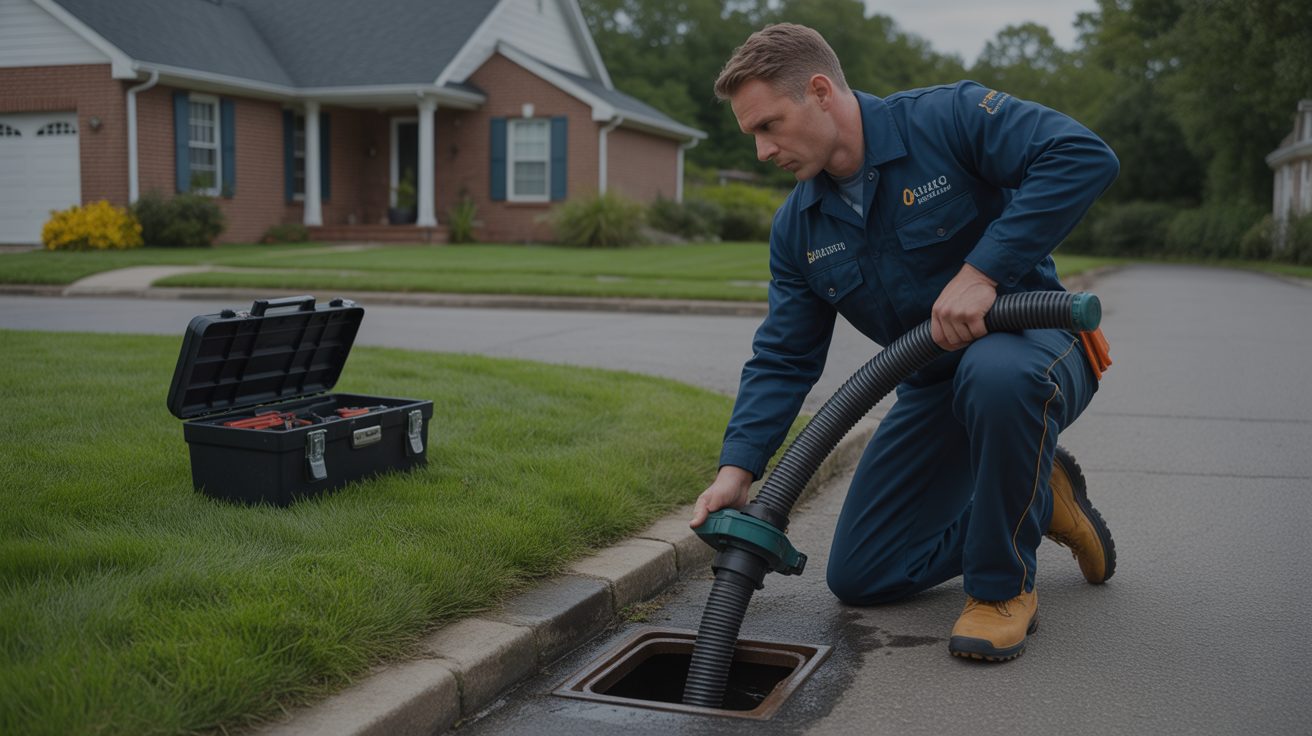
Right now, before we arrive
Four things that protect your home and your insurance claim in Calgary.
- Get a CCTV camera inspection before anything else — relining is a fix for structural damage, not a default for every drain issue
- Ask specifically whether your defect (root intrusion, crack, joint offset) is a relining candidate — not every failure is
- Get the liner's design life and resin type in writing, not just verbally
- Confirm access-pit locations before work starts, so there are no surprises about what gets disturbed
How the process works
From first call to verified fix — documented at every step.
Camera inspection & measurement
The damaged section is surveyed and precisely measured so the liner is cut to the exact length needed.
Pipe cleaning
High-pressure jetting clears the pipe walls completely — a liner only bonds properly to a clean surface.
Liner installation
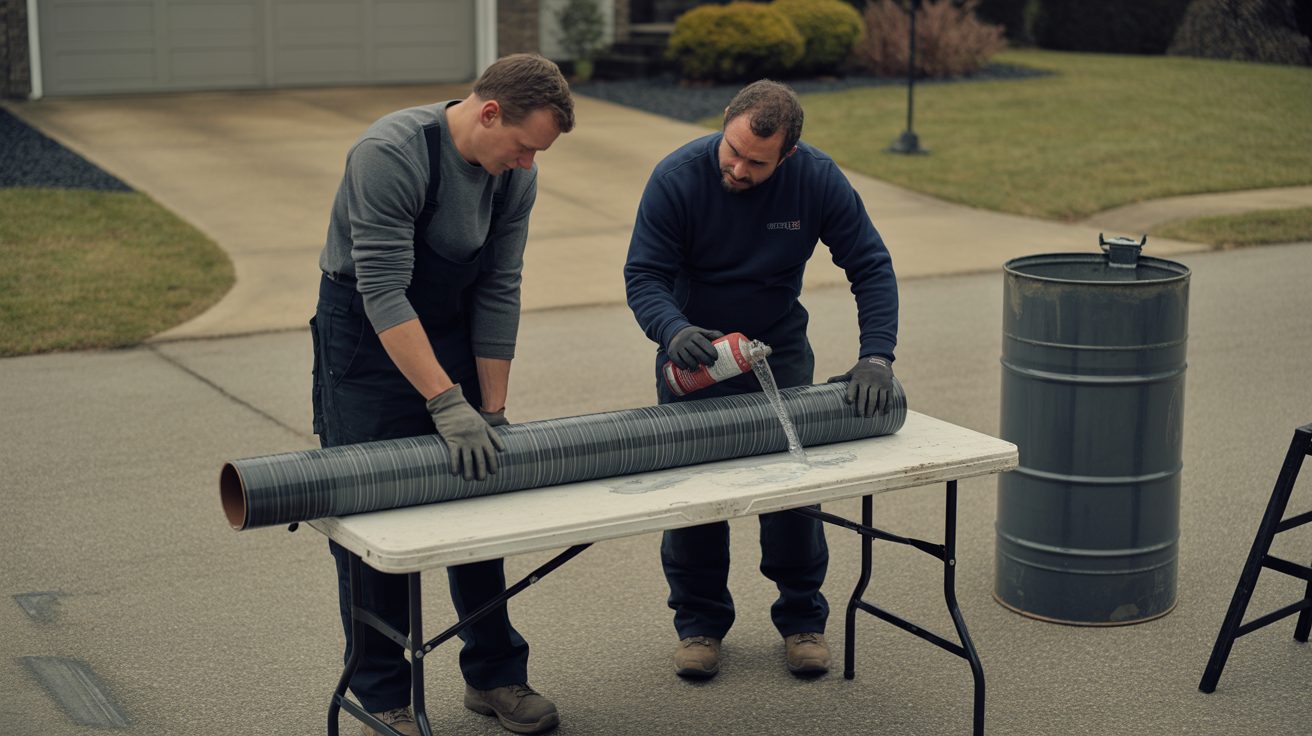
A resin-saturated felt liner is pulled or inverted into place through a small access point, then inflated against the host pipe wall.
Curing & verification
The resin cures (by heat, UV, or ambient temperature) into a rigid new pipe, then a final camera pass confirms the finish.
Common questions
What it isWhat exactly is CIPP pipe relining?
Cured-in-place-pipe (CIPP) relining installs a resin-saturated liner inside an existing damaged pipe, then cures it into a smooth, jointless replacement pipe within the old one — done through small access points rather than a continuous trench.
When it winsWhen does relining beat digging the pipe up?
When the surface above the pipe — a driveway, mature garden, foundation slab, or busy street — makes excavation expensive or disruptive, and the existing pipe's alignment is still basically sound. Severely bellied, crushed, or misaligned pipe usually still needs excavation.
LifespanHow long does a relined pipe actually last?
Properly installed CIPP liners carry a design life around 50 years — comparable to a new pipe — because the cured resin becomes a standalone structural pipe, not a patch.
Cost logicWhy does relining sometimes cost more than expected?
Price scales with pipe length, diameter, number of access points needed, and how many bends the liner has to negotiate — a straightforward short run costs far less than a long line with multiple junctions.
Request a free inspection
Tell us what happened — a local coordinator will follow up quickly.